
16th June - Peace Priced In?
Yesterday saw further confirmation of the deal between the US and Iran, with the deal set to be formally signed on Friday in Switzerland. The broad details are reported to be a 60-day agreement to re-open the Strait of Hormuz, halt hostilities, lift the US naval blockade, release around $25 billion in frozen Iranian assets, and waive oil sanctions. Further nuclear discussions will then follow later.
The market is treating the deal as done, with the reaction over the weekend and today being clearly risk-on. The caveats remain, however, that a deal has been agreed but not signed, and that even once the deal is signed, it will take months to clear the Strait and return to normal operations, with even longer needed to replenish global oil reserves.
Forex
The moves on Monday were relatively muted considering the news of a deal set to be signed. The DXY fell a little but far less than could have been predicted, implying that the majority of the 'deal done' news was already priced into the market. This means markets have most likely already unwound any war-related positions they may have had, so moving forward, markets will react to fundamentals more than further information on the peace deal or the deal signing itself. The USD seems well placed to continue its strength in this case, as US fundamental data has been strong over the past few months. The FOMC rate decision is this week where we are expected to see a hold in rates, the forward guidance around this from new Fed Chair Warsh will be key to guide the market over the next couple of months. There is currently no real argument for imminent rate cuts, so the focus will be on whether he cites the energy shock and inflation as a cause to hike rates in the second half of the year.

This morning saw both the RBA and BoJ release their interest rate decisions for the month. Both came in as expected, with the RBA holding at 4.35% and the BoJ hiking rates to 1% from 0.75%. As both of these figures were expected, the true news will be in the forward guidance each central bank releases. The focus for the markets will be on whether there is mention of sticky inflation or fears of oil prices being higher for longer, which would imply a more hawkish stance for the rest of the year.
The BoJ guidance in particular will be interesting for the USD/JPY market and the discussion around the 160.000-162.000 intervention levels. Despite the news of a deal being agreed, the pair is still sitting above 160.000 and remains close to the level at which the BoJ intervened in April this year. The BoJ will be hoping that the rate hike and any potential hawkish comments will move the pair lower and avoid the need for any manual interventions, but at present, even with the peace deal, we have seen prices remain high. The BoJ will be concerned with the momentum of the pair despite roadblocks, so may be preparing themselves either to intervene soon or abandon the 160.000 level as one they wish to defend. The pair remains one to watch.

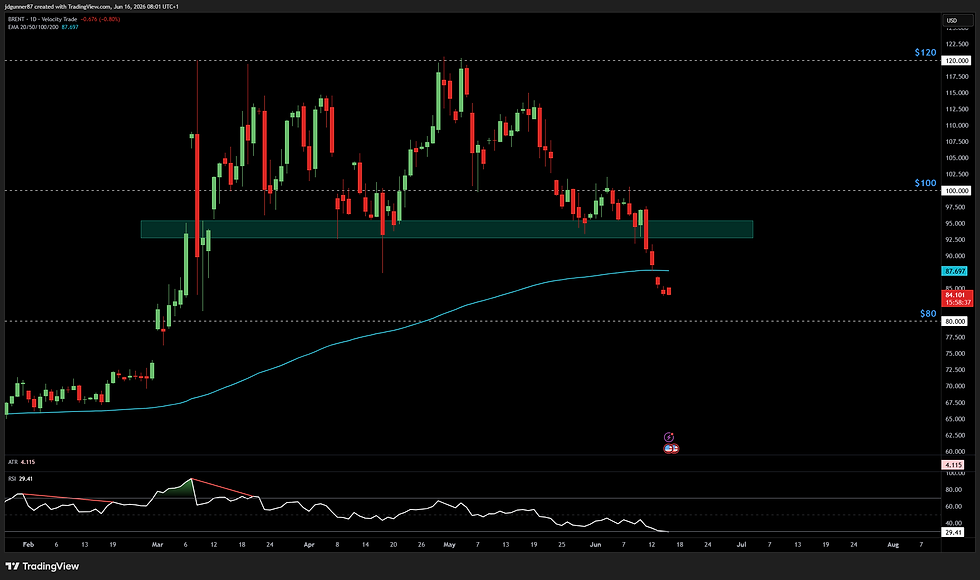
The CAD remains under pressure from falling oil prices, with Brent Crude now sitting around $85 and US Oil around $80. Once the deal is signed in Iran, we can expect to see oil prices eventually fall further, but this could be a very slow move as it will take months to fully clear the Strait. It would not be outside the realm of possibility to see oil prices rise a little in the meantime, if markets have underestimated how long it will take to clear the backlog. Some of the demand lost due to uncertainty around the war may return before supply has been able to catch up, pushing prices up before increased supply pushes them down. Although oil should fall in the long term and CAD will suffer as a consequence, it will not be a clean move down in the short term.
The EUR, GBP, and CHF remain in similar positions to before the war. They will be helped by falling oil prices but are still being broadly affected by other currencies rather than affecting other currencies themselves. AUD and NZD remain tied to precious metals prices for the time being, which will be looked at in more detail shortly.
Indices
Monday continued the risk-on rally in stocks. The Dow was up 0.5%, the S&P 500 up 1%, and the Nasdaq up 2%, with the semiconductor stocks leading the way. There were a number of other stocks heavily reliant on oil prices (airlines, cruise companies, etc.) that performed well yesterday, while SpaceX continued its strong start with another 20% gain on the day. However, it is worth noting that only around half of the market actually moved higher on the day, despite the overall move higher in indices.
After witnessing the concern that was taking over the market at the start of last week and the perceived moving of capital from growth stocks to value stocks, this seems to have flipped on the news of the deal back into growth stocks, meaning the narrow-leadership concerns are resurfacing. It seems the market was beginning to come to its senses last week as a deal seemed less likely, before jumping back into the optimism bubble as soon as the deal was agreed.
With deal optimism dominating the market for weeks before the deal was announced, this again raised questions on whether the deal is already fully priced in and will not affect the markets further. The concern could be that we then see a 'sell the news' scenario on Friday once the deal is actually signed and confirmed.

Precious Metals
Gold and Silver both gapped higher yesterday on the market open as the receding rate-hike channel helped both markets, giving further evidence that for metals safe-haven demand has been completely outweighed during the conflict by concerns about rate hikes. However, the issue the metals are facing is that, as discussed previously, energy prices will not drop straight away. This means rates are likely to be higher for longer, and as we have mentioned in the past, this means there will be interest rate pressure on Gold and Silver for a while longer at least.
It seems as though there may be another 'sell the news' opportunity with metals; they have jumped up on the expectation of a deal being signed, but once that spark fades, the markets will be left to focus on the fact that rates will not come down for a while. As has been mentioned in previous posts, we can expect to see some short-term pressure before some longer-term strength for metals later in the year.

Today's Key Market Drivers
AUD & JPY Central Bank Guidance - Both will be released this morning, and both will guide the medium-term movements for the respective currencies.
Iran - Any complications or further developments with regard to the peace deal will be market-moving.
Comments