
8th May - The Real Deal?
Forex
The details of the potential agreement between the US and Iran were fleshed out a lot more yesterday and gave more information to the markets about what to expect moving forward should a deal be reached. The agreement would create a 30-day window for detailed negotiations on opening the strait, Iran's nuclear program, and lifting US sanctions. One of the key changes seems to be a softening stance from both sides on some parts of a deal involving Iran's nuclear program, with the US reducing the length of a moratorium on enrichment and Iran listening to proposals about moving their enriched uranium to the US. Key for markets is that the shipping restrictions in the Strait of Hormuz would be lifted in stages rather than all at once.
While talk of a deal was encouraging, the fact that the US struck an Iranian oil tanker on Wednesday and that Trump is still making threats on social media shows that the threat of military action is still there. The markets are now more confident in a deal than in no deal, but this is by no means confirmed, and any changes to this stance could move markets significantly.
The USD was positive on the day yesterday, boosted by jobless claims at 200,000 that were a slight beat on expectations and a lack of clear response from the Iranians. The USD is currently stuck between losing safe-haven demand should an agreement be reached, and a resilient labor market that reduces the likelihood of rate drops. The market seems to switch between the two forces depending on the day and the news released most recently. Today we see NFP released; should there be increasing optimism that a deal will be reached, the markets will pivot back towards traditional fundamentals, with NFP being one of the most impactful for the USD. This could give a strong indication as to the true health of the US economy and labor market, therefore giving a strong indication as to where rates may be headed for the remainder of the year.
The EUR/USD is interesting today. We did not see a follow-through on the initial move after the peace talks news broke and seem to be hovering around the same 1.1750 we have been at for the last week. The pair is caught between the bullish impact of peace talks, but also the bearish effect of reduced oil prices meaning less likelihood of ECB rate hikes. This is something we are seeing with a number of currencies that are not considered risk-off - the benefit of peace pushing up demand but the reduction in likelihood of rate hikes pushing down demand. The EUR/USD is the best example of this in the market right now.

The GBP/USD fared similarly yesterday, but the UK is still caught up with concerns around heightened Gilt yields, heightened due to concerns with the UK economy reducing demand for government bonds. Yesterday we saw local elections in the UK, which will give us a sign as to the prevailing political winds in the country and could give some concern or confidence to investors depending on the outcome. A strong showing for the current government could give some confidence, but a poor performance would just add to uncertainty and reduce demand further in an already struggling market.
The normally risk-on CAD continued to show that the larger driver in its movements has been the price of oil. Having seen the USD/CAD fall consistently while oil has risen, we have then seen a turnaround since the start of the month, with the pair gaining 0.8% since the start of May. Considering the USD is risk-off and CAD risk-on traditionally, this pair has further reinforced the unique nature of the current market and how the energy price shocks have rewritten a lot of the traditional rules in forex during the conflict. Should we see more positive signs from peace negotiations, we can expect to see this trend continue.

Indices
Yesterday, we saw a pullback from most indices after the bumper day on Wednesday. The S&P fell 0.47%, while the Dow fell 0.8% and the Nasdaq 0.1%. This came on the back of declines in companies such as Micron and AMD that had been on significant recent upward runs. These moves felt more like profit-taking and mean reversion, however, as opposed to any change in narrative or direction. Unless we see a significant shift away from a peaceful outcome in Iran, the momentum should continue north for the time being.

It is worth noting that legendary investor Paul Tudor Jones noted yesterday that today's market reminds him of 1999, a year before the Dot Com bubble burst. He mentioned that the AI boom may still have a year or two to run, but implied that he expected to see a pullback once the bubble bursts. The markets currently seem significantly overbought, so this is something to keep a close eye on over the rest of the year. How far can it go, what will stop the momentum, and how quickly will it fall if the bubble does burst?
Later in the year, if we do see a retracement, there could be some fantastic buying opportunities, but for now, I would be hesitant to be long for more than short-term moves.
Precious Metals
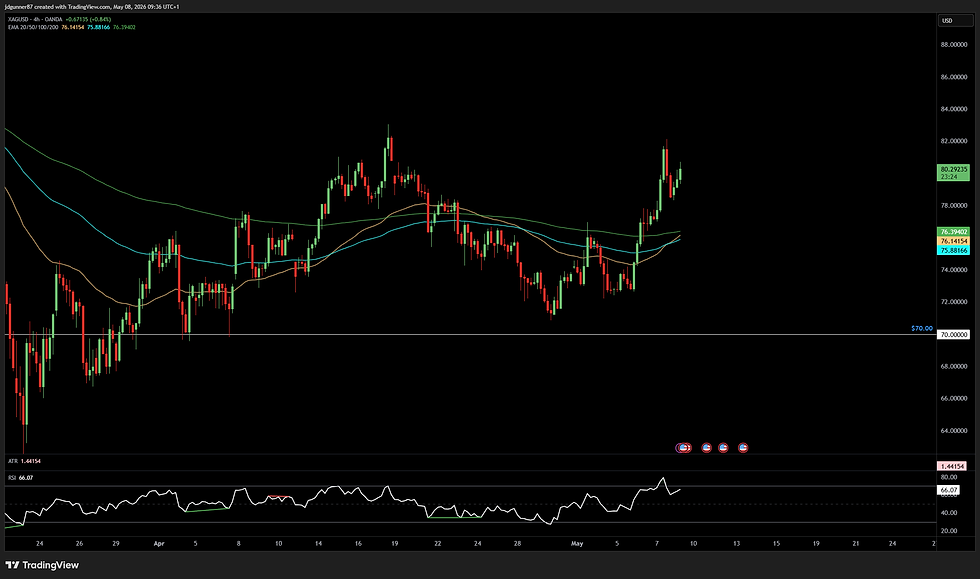
Both of the major metals continue to have good days, with both Gold and Silver up yesterday on continued optimism of a peace deal. It is also worth noting that the move sustained even with dollar strength yesterday, suggesting the moves are supportive of the metals and not just based on dollar weakness. It would also suggest sustained institutional buying as well, possibly signaling a return to true safe-haven status as we wait to see how the energy shock and slow unwind of the Strait of Hormuz blockade affects economies in the long term. Looking for some form of a pullback before jumping on the trend long could be an excellent plan moving forward. However, if we see any negative news from Iran and oil prices remain elevated, the risk of rate hikes will outweigh safe-haven demand, and we could see metals drop lower again. It may be an idea to stay on the sidelines just a little longer until we have a firmer idea either way.
Today's Market Drivers
Iran - The Iranian regime's response to US proposals remains the most important inflection point of the day and could be the most important news event of the year. This is absolutely key to how the markets will move over the next days, weeks, and months. Positive news and risk-on assets will see a boost; bad news, and we will revert back to USD strength and general uncertainty.
US NFP Figures - This is normally one of the most important data releases each month, and this one should be no different. It will be a key indicator of whether the US employment market continues to show resilience or whether it will show signs of weakness due to energy price shocks. Positive news will encourage higher rates and a boost for the USD; weak figures could be a concern for the US economy as a whole and so push down the US Dollar.
Comments