
5th May - 'Project Freedom' vs 'Project Deadlock'
Geo-Politics
The Bank Holiday weekend proved to be a volatile one, with a number of developments in the Iran conflict. There were reports of an Iranian attack on US ships, with rumors swirling around as to whether they were real or fabricated. Trump then announced on Sunday 'Project Freedom', where stranded commercial ships would be guided through the Strait of Hormuz through a narrow corridor, supported by US naval vessels. This was deemed a ceasefire violation by the Iranians, who dubbed it 'Project Deadlock'.
The name 'Project Deadlock' aptly sums up current negotiations between the US and Iran, with neither seeming willing to move from their current position. Monday then saw the most significant incident in days, with Iran striking oil infrastructure in the UAE and one UAE oil carrier. The move caused another spike in oil prices, with Brent again touching the $120 mark on Monday. The Iranians have tried to propose a new one-month framework to end the war and re-open the Strait, but it does not seem to involve any concessions from Iran's side, and Trump has already signaled he will not accept it in its current form. The circular standoff thus continues.
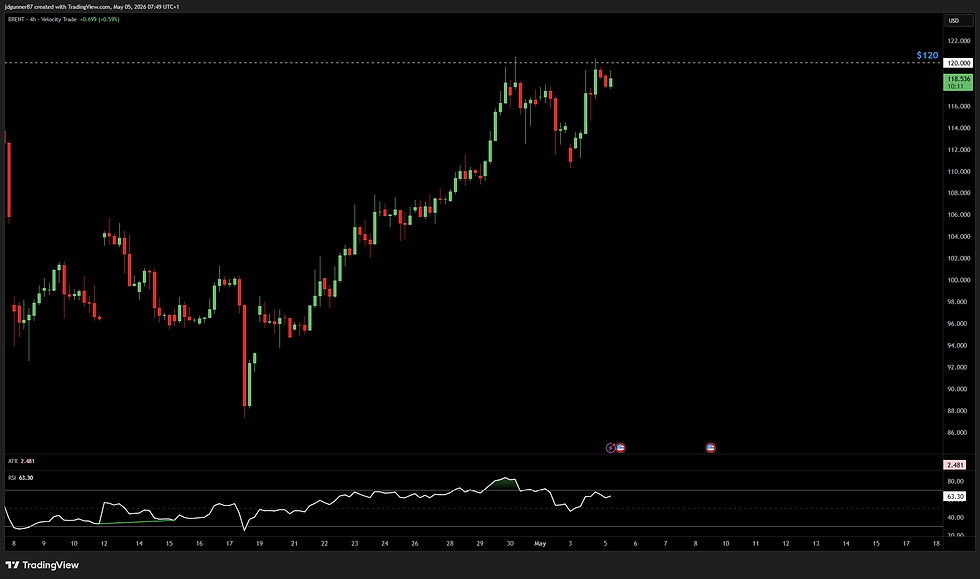
There was some positive news for the US attempts in the region on Monday, where two US-flagged vessels were successfully escorted through the Strait, the first commercial transit in weeks. This week will tell us whether it is a one-off or proof of concept for Trump's plan.
Forex
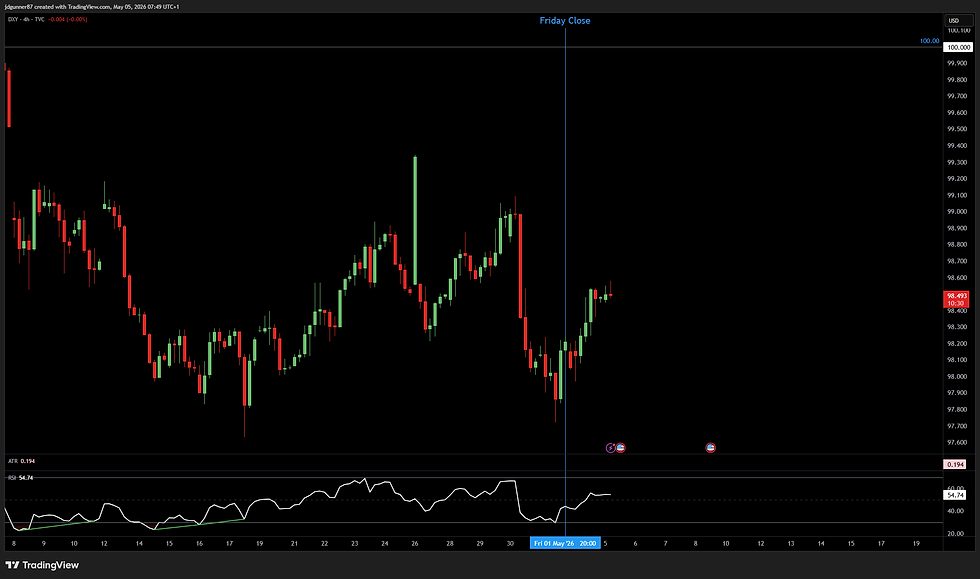
The past three days saw the USD regain its safe-haven demand, gaining ground on almost all other major currencies after struggling at the end of last week. The US is moving back towards being seen as the party trying to restore order, rather than the source of instability, which is helping it take back its position as the main safe-haven location for the markets. Should we continue with the diplomatic standoff between Iran and the US and if we see further Iranian strikes on oil infrastructure, this renewed demand in the USD should continue. Any breakthrough in negotiations, however, and we could see demand melt away for the USD and a sharp fall in the DXY. We do have some significant economic figures released this week, with JOLTS Job Openings today, then both NFP and Unemployment figures on Friday. If we see some changes in the geopolitical situation before then, these could have an impact on the market, but if not, these could continue to play second fiddle to the Middle East uncertainty. As has been said over and again, the near-term future rests almost entirely on geopolitics that cannot be predicted.
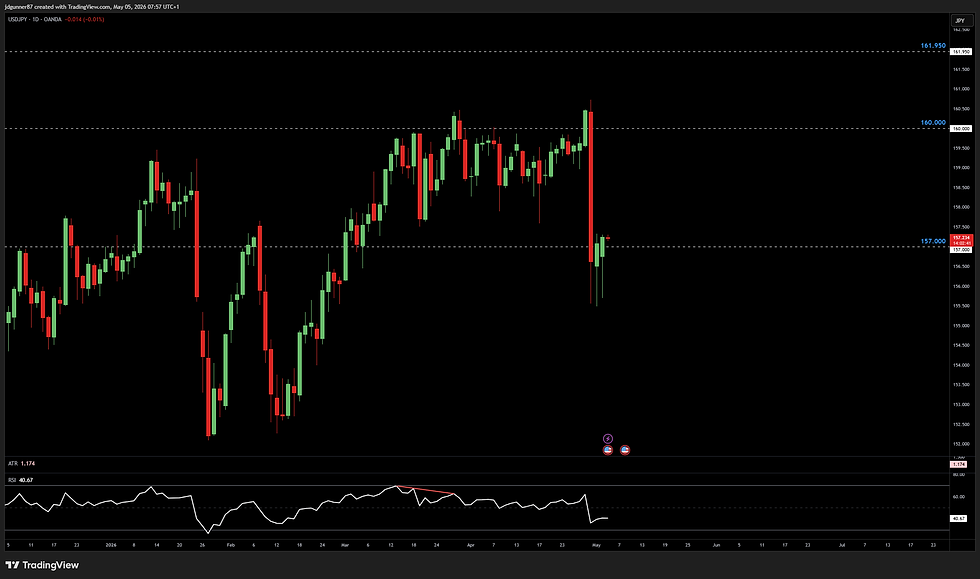
It was confirmed over the weekend that the BoJ did intervene in the markets to the tune of $35 billion, but without the dramatic effect that was seen the last time it intervened. The USD/JPY remains just above the 157.000 level but seems to have shown resistance to any further falls without intervention for the time being. Both the oil price effect and economic fundamentals are weighing heavily against the JPY at present, so the effects of the intervention may only have been temporary. We may well see another push up towards the 160.000 level, at which point the BoJ will have an important decision to make. Do they continue to intervene in the hope that this time it sticks?
We saw the expected rate hike from the RBA this morning, moving the rate in Australia to 4.35%. Whilst this is broadly bullish for the AUD, we have seen the AUD basket depreciate this morning after the release of the news. This was broadly due to the rate hike already being priced in, but was also caused in part by an absence of hawkish language from Governor Bullock around the release. Coupled with the risk-off sentiment currently in the market, the AUD has struggled when it would logically have been expected to bounce. The future in the near term for the AUD seems focused on the Middle East and any new developments in the region.
Indices
The Mag 7's excellent earnings figures last week continued to push the tech-heavy US indices higher going into the weekend, before the news from the Middle East gave some form of a reality check. Both the S&P and Nasdaq are still near all-time highs, however, and on the surface currently show no signs of slowing down. The Dow took a hit yesterday after the weekend's events, falling 1.4% on the day, showing that the bulk of the strength is continuing to come from the tech super giants. We have a number of large earnings releases again this week, with companies such as Pfizer, PayPal, and DuPont releasing figures today and more as the week continues. It will be interesting to monitor these less AI-focused companies, as they could be an indicator as to how the wider market is being affected by the energy crisis.

Precious Metals
Both gold and silver continue to flirt with their respective key psychological levels, gold at $4500 and silver at $70. Both saw some support at the end of last week before being hit by the news over the weekend. This further reinforces that the safe-haven demand we normally see for precious metals is not being replayed in this instance; inflation and rate hikes are proving to be far more important factors at the moment. As a result, this week's price action will be completely focused on the news from the Middle East. Good news could see both rally impressively, while continued negative news could see both metals break their key levels and move lower.

This Week's Key Market Drivers
Iran/US Negotiations & 'Project Freedom' - The market will be completely focused on the Middle East this week. We no longer seem to have the ceasefire optimism, and there is significant uncertainty as to how the situation will develop. If we see good news, the markets could soar; bad news could see markets fall.
US JOLTS Job Openings & PMI Data - This is released today and is the first meaningful US data of the week. However, I fear that this may be overshadowed, in the short term at least, by any news from Iran, and so unexpected results will not have the effect they may otherwise have had.
US NFP & Unemployment Data - This is released on Friday. If we see a reduction in escalation in Iran, this could be a key data point, but if we are still overshadowed by uncertainty, then anything but a big surprise could end up as background noise in the larger picture. Still, one to pay attention to, though.
RBA Aftermath and BoJ Intervention Follow-Through - The actions of the respective national banks will have a significant effect on the AUD and JPY. It will be important to keep an eye on any comments or announcements from both.
Trump's Visit to China - This week, Trump is expected to travel to China for trade talks with President Xi. Any news that could reduce inflationary pressures will be gratefully received by the market and could see large moves on the release of the information.
Comments