
28th May - Negotiating On Fumes
Geopolitics
There were strikes overnight from the US on Iranian military sites in Bandar Abbas, a port city on the Strait of Hormuz. The IRGC then claimed that they had struck a US air base early this morning, though the location was not disclosed. These actions are a meaningful escalation and a continuation from the US strike on Monday, putting the ceasefire and peace negotiations under serious threat.
The strikes come after comments from Trump yesterday that Iran is "running on fumes", that the US is not satisfied with the talks and warned Iran to make a deal, saying "either that or we'll have to just finish the job." We also saw a draft agreement leaked to the media by Iran that was dismissed by the US as a fabrication, further muddying the waters and increasing the uncertainty around the talks. Are the comments and strikes just negotiating tactics to strike a better deal, or are both sides genuinely not able to find common ground and peace talks are collapsing?
It seems the most likely short-term outcome is that we continue in the same vein over the coming days and even weeks, where we see rhetoric from both sides continuing to both claim strength and a willingness to negotiate, alongside small-scale military exchanges between the two parties. This will only add to the uncertainty for markets and keep risk-off assets elevated for longer.
Oil prices reacted to the news predictably, rising this morning after falling during the day yesterday. Brent Crude fell below $97 for the first time since the 21st of April yesterday, but today has risen back close to $100, while US Oil fell to $89 yesterday but is now back around $91. This volatility is likely to persist until we have concrete breakthroughs in peace talks; until then, we can expect to see more whipsaw action as headlines drop.

Forex
Yesterday and this morning have seen some USD strength overall, as the renewed uncertainty over a deal moved some capital back into the risk-off asset. The DXY temporarily reached its highest level since the 7th of April this morning, before falling away a little. The USD is still backed by good underlying fundamental data, so if we see continued uncertainty, the Dollar will continue to show strength and may even challenge the 100.000 level on the DXY before long. It seems it will take an unexpected breakthrough in talks to halt the USD's short-term momentum at present.

Interestingly, it seems that the CHF has not really seen any of its normal safe-haven demand over the past 24 hours, while the JPY has continued to struggle. The USD/JPY has continued to drift up over the past few days and is getting closer and closer to the key 160.000 level that the BoJ has defended in the past. We are currently sitting around 159.500, thanks to the current dollar strength it seems likely we will see the market hit 160.000 in the not-too-distant future. The same question then reappears: will the BoJ intervene again, how aggressively will it do so, and how long will the effects of an intervention last if the underlying fundamentals do not change? In the short term, there could be an opportunity to back a short position at or just above 160.000 and hope for an intervention, which could give quick profits before the fundamental drivers force the market back north.

Yesterday, the NZD continued to see strength off the back of the unexpectedly hawkish stance of the RBNZ, with the AUD/NZD falling a full 1.5% on the day. It is unexpected news like this that moves the market, as it forces participants to reassess their views on the currency. Sharp changes in future expected interest rates, such as we saw yesterday, will have long-lasting effects on the currencies' direction of travel. We may see a slight correction over the next few days if the market feels it has overreacted, but in the long term, we can expect to see the NZD regain some of the strength it has lost over the past year.

Indices
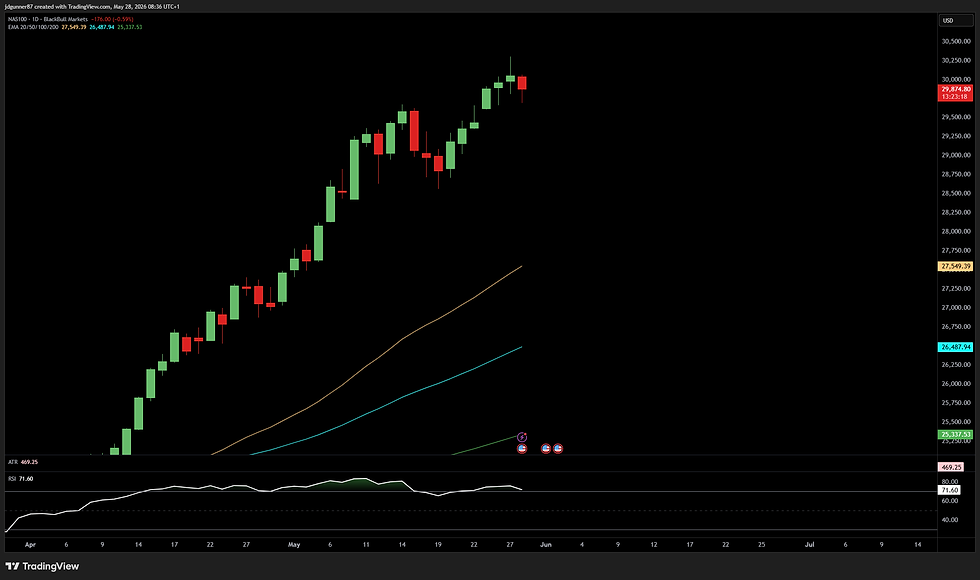
The major US indices saw a little strength yesterday, but have pulled back this morning on the news of strikes overnight. The FTSE 100 in the UK has seen a similar reaction, while the same can also be said for the Nikkei in Japan. The number of indices reaching record highs over the past week or so seems to indicate that a deal being reached has been partially priced into the markets, so any move away from this will be met with concern. When combined with the narrow leadership narrative we have seen, especially in the tech-heavy S&P and Nasdaq, any unexpected complications in peace talks or news that could affect AI/semiconductors will have an oversized effect. At present, there is more downside risk than upside potential, so caution is needed if we are to try to catch any new record highs.
Precious Metals
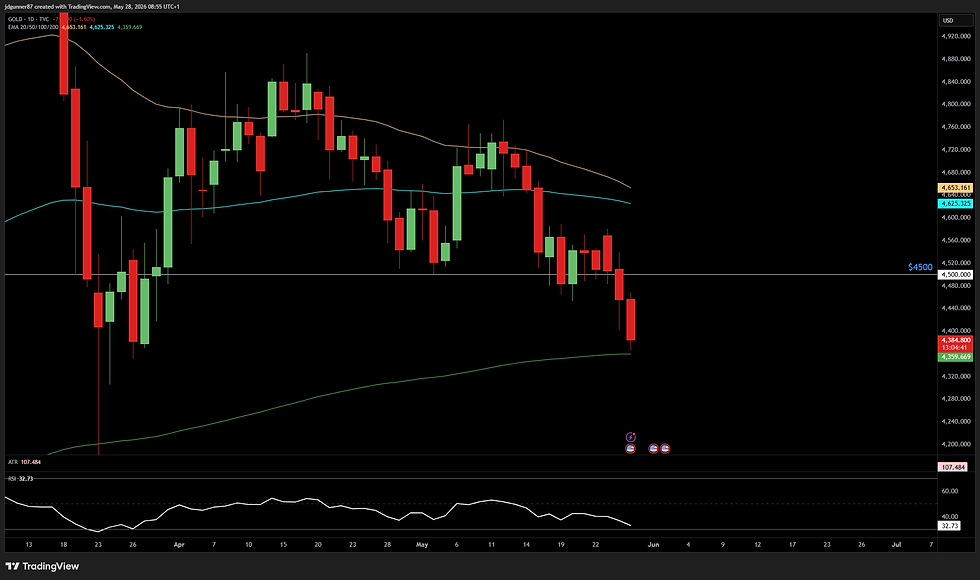
Yesterday may have been a consequential day for Gold, as we saw a clean break and close below the key $4500 level. It has since continued to fall this morning, dropping below $4400 as well. Gold now seems to be in a worst-case scenario where both safe-haven demand and rate-hike expectations are working together against it.
Normally, in times of uncertainty, precious metals are safe-haven assets, which would boost demand and raise the price for Gold. During the Iran war, this effect has been largely overshadowed by the inflation the energy shock has caused and the expected interest rate hikes this brings. Gold is a non-yielding asset, so it becomes less appealing if better yields can be found elsewhere. The rate-hike effect has largely overwhelmed any safe-haven demand for Gold so far, and so this has seen Gold prices fall. However, as we inch closer to a peace deal, any safe-haven demand Gold did have is now falling away, reducing demand further. This would normally have been counteracted by the reduced inflation expectations a return to lower energy costs would bring, but as prices have been higher for longer this is now baked into economies and is not a short-term effect. As a result, even if the war ended tomorrow, central banks would still need to deal with inflation and so will still be more hawkish. This means precious metals are now negatively affected by both a lack of safe-haven demand and the rate-hike channel, the worst of both worlds.
I think we can expect to see some further falls in Gold in the near term until inflation concerns ease, so shorting Gold could be a good play over the next few months. Silver is likely to also be affected, but its heavy use in various booming technologies gives it more of a baseline demand level and so will partially insulate it from the factors affecting Gold.
Today's Key Market Drivers
Iran - Will there be further escalation, or will the two sides move towards an agreement? News from the region will continue to define the day's price action.
USA PCE - A key inflation figure for the US, this will help to give us guidance as to what we can expect from the FOMC over the coming months.
USA Prelim GDP - The main growth figure for the US economy, this will add to the PCE figure in giving us a picture of how the US economy is coping with the energy shock and its downstream effects.
Comments