
23rd September - UN General Assembly Begins
Yesterday saw the beginning of the UN General Assembly, where the biggest news was that Tehran has offered to reopen the Strait of Hormuz within seven days if the US eases military pressure and lifts its blockade of Iranian ports. The US has said they are 'open to that', but there have been no formal talks and nothing has been scheduled. However, following on from yesterday, these are the first signs for a while of a willingness to reopen negotiations. We have been down this road before and come away with nothing, but the fact that these sorts of noises are beginning to be made can only be a good thing.
The water was muddied by Trump, however, who then said that any deal would come after the November midterms. The Republicans are struggling in the lead-up to the midterms and it would be very 'on brand' of Trump to use something like this as leverage to win votes, so these comments are something that do need to be taken seriously.
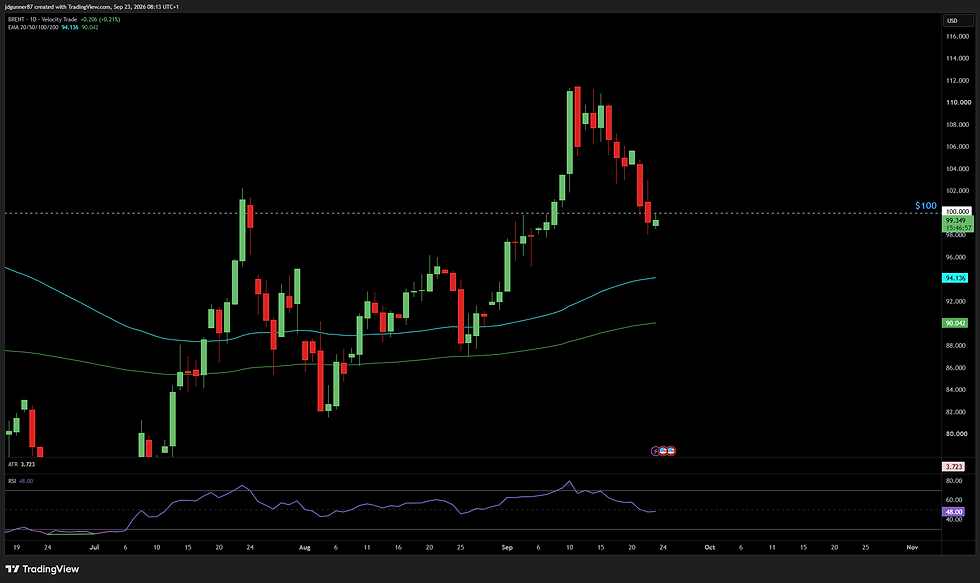
Oil continued to fall yesterday, with Brent closing below $100 and US Oil below $90. Yesterday was the 5th consecutive day of falls, encouraging signs for those keen to see oil return to more manageable levels. There have been reports that the Saudis are close to being able to restart their East-West pipeline and so increased their output from the region, which coupled with the discussions around the UN summit has helped oil to its longest losing streak for a long time.
Forex
The USD saw yet another positive day, with the DXY moving to 100.550 and starting the day today on fire. Yesterday we saw more hawkish Fed comments, with one member noting "passing shocks like tariffs and energy are not fading" and another calling a "somewhat more restrictive" stance appropriate for todays environment. The FedWatch tool currently shows a 53% chance of another hike to interest rates next month, if this trend continues and we see data to support hikes over the next few weeks, the USD could be in for a longer term bullish run as we move into October.

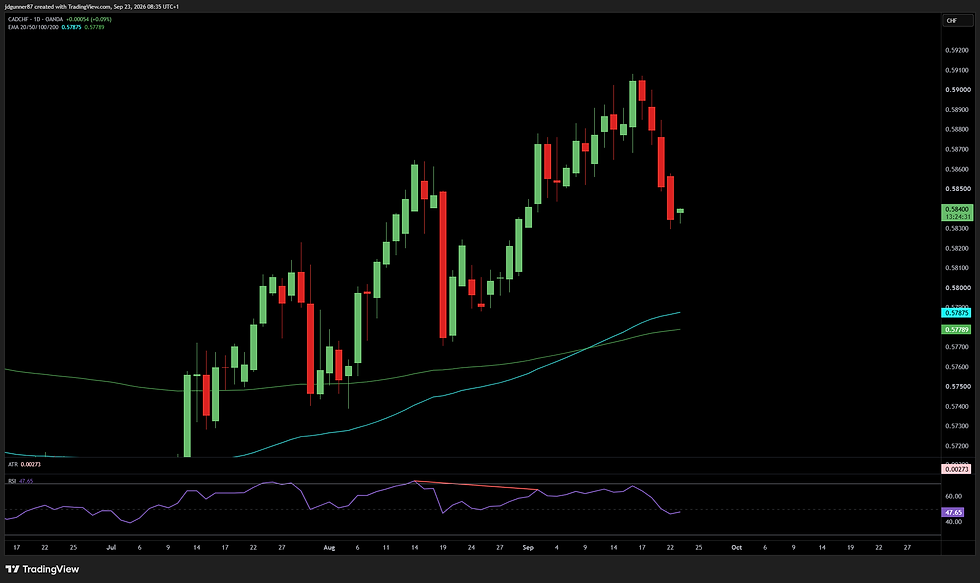
The CAD continued to struggle yesterday on falling oil prices, losing further ground to other more supported currencies like the CHF which continues to gain support in advance of tomorrow's SNB interest rate announcement.
The NZD saw a bounce yesterday after hawkish comments from RBNZ Governor Breman, who flagged energy prices as a cause for persistent inflation pressure. The NZD had been struggling of late after the more dovish comments made at the RBNZ's most recent rate announcement, so this may be an attempt to balance the narrative around the NZD moving forward.

Indices
In terms of indices, we saw the US market split again. The Nasdaq Composite closed close to another record, the Dow slipped, and the S&P 500 finished flat as the two sides cancelled out. That split came from sectors moving in different directions, not from a change in overall risk appetite.

The Nasdaq was driven by AI once more, and this time it came from a product rather than capex numbers. Meta extended Monday's rally after reports that downloads of its Muse AI agent have outpaced ChatGPT's early take-up, and the enthusiasm spread to Shopify and the chipmakers. It is worth noting how this fits the spender-versus-supplier debate. Meta has been one of the heaviest spenders, and the market is now rewarding it because it can finally show what that spending has bought.
The Dow's weakness came from financials. Schwab, Goldman Sachs and JPMorgan all lost ground after Barkin and Collins made it clear that last week's hike may not be the last. With the 10-year sitting just below 5%, the market is pricing higher-for-longer rates as a risk to credit and valuations rather than a boost to bank margins. Small caps did better than I expected, helped by the drop in oil easing input-cost worries.

The question now is what happens when Xi arrives in Washington tomorrow. If AI export controls come up, the Nasdaq's leadership is the part of this market with the most to lose.
Precious Metals
In terms of precious metals, gold spent another session trapped between two opposing forces. On one side, the talk of reopening Hormuz removes some of the safe-haven demand that has supported gold. On the other, a Fed talking about further hikes, a 10-year near 5% and a dollar at multi-week highs mean there's no rate relief to replace it. Both of those point lower, yet gold dipped towards $4,300 on Tuesday and bounced straight back.

That resilience is the more interesting signal. If gold can't be pushed through $4,300 while diplomacy and a hawkish Fed are both working against it, the buying underneath it likely has less to do with rates or geopolitics and more to do with confidence in fiscal policy. Tuesday's UK borrowing overshoot was a small reminder that the concern isn't limited to the US. Silver held up slightly better than gold, which fits the firmer risk tone in equities.
I am watching $4,300 as support and the $4,350–4,400 region as the ceiling. The question now is whether an actual US-Iran meeting, rather than just talk of one, is the catalyst that finally breaks that floor.
Today's Market Drivers
EUR flash PMIs, 9am UK time
GBP flash PMIs, 9:30am UK time
During the day: Fed's Barr speaks, plus ECB's Lane and Vujčić
Throughout: any sign of a scheduled US-Iran meeting in New York
Comments