
21st May - Genuine Breakthrough?
Geopolitics
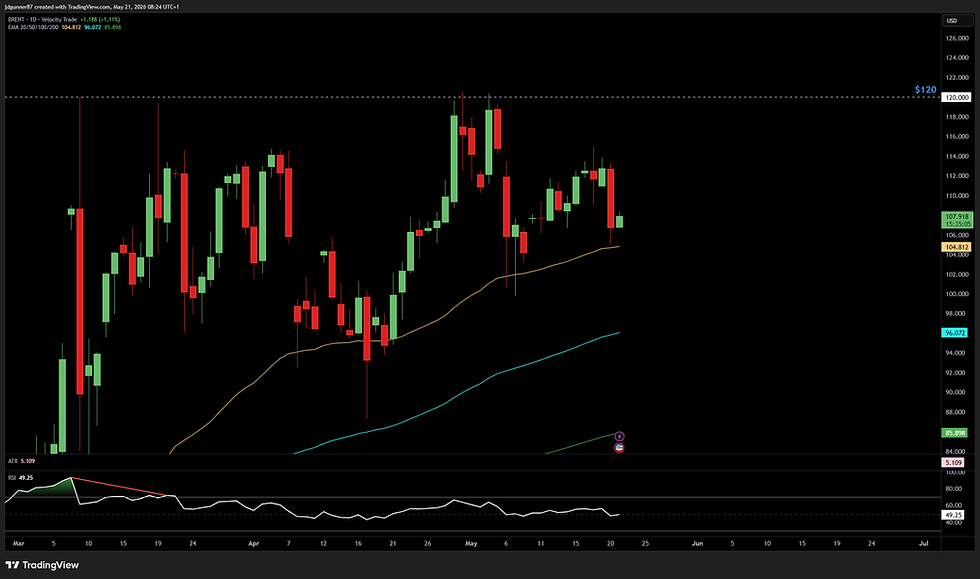
We saw announcements from the US yesterday that a potential deal between the US and Iran could potentially be in its final stages, paving the way for a genuine end to the conflict and thus a reopening of the Strait of Hormuz. Reports from the area suggest there have been concessions on both sides, a possibly crucial development after weeks of neither side willing to give up any ground. Brent Crude Oil fell on the news from $112 to $107, a fall of over 5% on the day.
This has been the first time since the collapse of a deal at the start of the month that we have seen genuine progress. The delay of US strikes at the start of the week seems to have given both parties the room to come close to an agreement. It is worth noting, though, that this is not yet a done deal. We are 'in the final stages' but are not over the line. While the talk of concessions on both sides makes a deal more likely, this is the stage where things have broken down in the past, and so we do need to be cautious until a final agreement is reached and announced.
Forex
Markets reacted to the news of a possible deal yesterday, with the USD falling against most currencies on the potential unwinding of risk-off sentiment. The move was noticeable but not overwhelming, emphasizing the fact that while this is good news, there is still work to be done to come to an agreement. We should see a strong move if a deal is announced by the end of the week, and a return to fundamentals driving price action as we move forward.

EUR/USD saw muted support on the news, encouraged by the good news but not pricing in a concrete resolution just yet. The EUR is particularly exposed to the energy shock that higher oil prices bring, so if and when we do get a final deal, we can expect to see a far larger move north for this pair. In the meantime, until that time, the pair may stay in some form of a holding pattern.
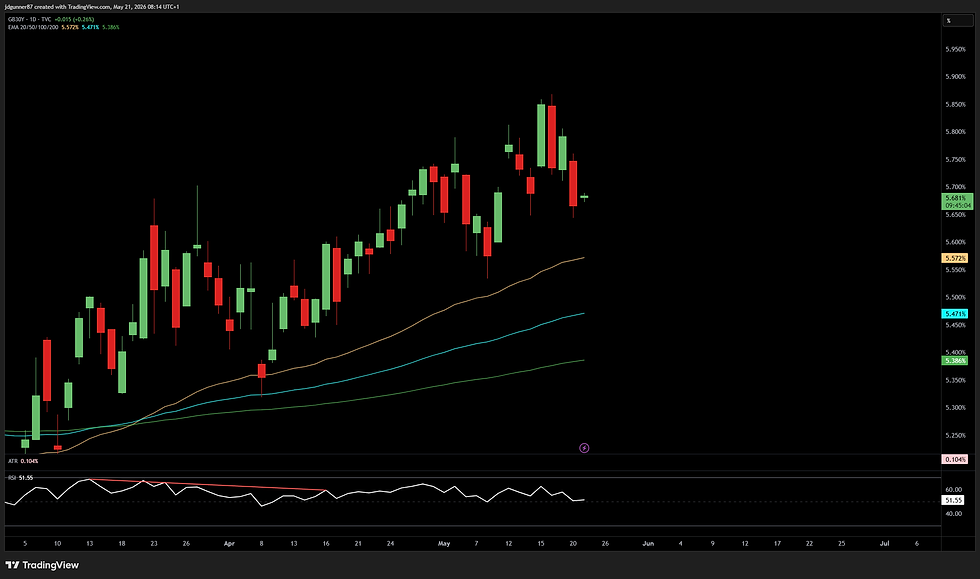
The GBP also saw support against the USD, but interestingly also found support across the basket after the lower-than-expected CPI print yesterday morning. In normal market conditions, a lower CPI print would push the currency down as it increases chances of rate cuts, but the effect yesterday was actually the opposite. This is thanks to the fact that the lower inflation print restored some confidence in the UK economy, which caused UK Gilt yields to drop markedly. Again, normally a fall in bond yields is negative for a currency, but again in this case, it was positive. Currently, the high bond yields in the UK are due to a lack of faith in the UK economy's long-term prospects, a lack of demand causing the Gilt prices to fall and so yields to rise. Yesterday saw some confidence return and so an increase in demand for UK assets, which then caused an increase in demand for the GBP that is needed to buy these assets. It will be fascinating to see if this counterintuitive relationship continues over the near term.
The USD/JPY has been grinding north towards the key 160.000 level over the past week. Yesterday was the first day since the 8th of May that saw a fall in the price. Thanks to Japan's dependence on oil from the Middle East, it is especially sensitive to news from Iran. The fundamentals are still lining up for this pair to continue north, however, so unless we see a resolution over the next day or two, we may still see the pair hit 160.000 and again see how the BoJ reacts. It continues to be a very interesting pair to watch. There is the potential for BoJ intervention and positive Iran news to take place at similar times, so there is the makings of a high risk-reward trade at the 160.000 level if we get there.

For the commodity currencies, AUD and CAD continue to move inversely on the back of news from Iran. The oil-dependent CAD fell on the news yesterday as we saw a significant fall in the price of oil, while AUD made gains on the back of the increase in the price of precious metals. Both currencies remain heavily influenced by other assets in the short term, so when trading either of these, the relative assets having an effect need to be factored in before decisions are made.
Indices
Yesterday, the indices received a boost from both the Middle East news and strong Nvidia earnings. Nvidia posted strong numbers, which further reinforced the AI trade and assuaged any short-term fears that the bubble may be bursting. The news from Iran also helped push indices north as all risk-on assets received a bid on the day. The next point of interest will be to see whether this positive news has a carry-through effect after the recent couple of negative days. How the indices react between now and the end of the week will tell us a lot about whether we see a continued rise and a reinforcement of the blind optimism around the heavy influence of tech stocks, or whether the top is in and the market starts to turn bearish as the feeding frenzy surrounding AI starts to wear off. I think we may need to see some form of negative earnings from one of the mega tech companies to ignite this change in sentiment overall, so we may see a push back up to all-time highs before we see the sustained pullback that may be needed in a healthy market.

Precious Metals
Gold and silver both saw support yesterday on the news from Iran, with gold pushing back past $4,500 and silver rallying from the low $70s. The news from Iran encourages optimism that we may see the Strait of Hormuz reopen, oil prices fall, and consequently a reduction in inflation concerns. The reduced subsequent risk of rate hikes is what is giving support to precious metals. The normal risk-off support that precious metals find has been completely outweighed by the rate-hike concerns at the moment. This will continue to be the case until the energy shock has dissipated, which, even if an agreement is reached today, could be months from now. In the near term at least, precious metals will continue to behave like risk-on assets until inflation fears are no longer a key part of the market's thinking.

Today's Key Market Drivers
Iran - Once again, the main focus for the markets will be Iran and how close we are to getting a peace deal. This will be the most important thing to follow and will eclipse almost any other news that could be released.
EU and US PMI data - This will have nowhere near the impact of the Iran deal, but it will be useful to follow to gauge the EUR and USD market fundamentals moving forward into a post-Iran war world.
Walmart Earnings - While not as consequential as Nvidia, Walmart earnings will give us a good insight into the performance of non-tech stocks in the US and a wider view of the US economy.
Comments